 ← Universe
ORCHESTRA · CHOIR · SOPRANO
ETERNO
A contemporary cantata about time, matter, memory —
and what remains beyond them.
A WORK ACROSS TIME
Some works begin
with an idea.
This one began
with a few lines.
25 YEARS IN THE MAKINGIn 2001, I wrote the melody for Orologio da polvere — The Hourglass — inspired by the poetry of Ciro di Pers. That first melody was the seed from which ETERNO would later grow.
The melody stayed with me. Over time, I returned to the poem and began to hear a wider musical world around it.
Years later, that first melody became the starting point for a larger work: a cantata exploring time, matter and memory.
Today, ETERNO exists as a contemporary cantata for orchestra, choir, soprano and electronic soundscapes — a journey through matter, time and consciousness.
Not a narrative in the traditional sense. A sequence of states.
Water. Sand. Sleep. Earth. Wind. Time.
And finally — Aura.
BETWEEN TWO CENTURIES
Ciro di Pers × Demitri DARR
What remains when time has taken everything else?
At the heart of ETERNO lies an encounter between two artists separated by centuries. The poetry of Ciro di Pers speaks repeatedly of time, mortality, matter and disappearance. In Orologio da polvere, the movement of a few grains of sand becomes an image of human existence itself.
I never wanted simply to “set an old poem to music.” The idea was to let the poetry pass through another time — through a contemporary musical language — and see what might emerge on the other side.
“Poca polve inquieta…”A little restless dust…
One of the seeds from which ETERNO grew.
A life between study and the wider world.
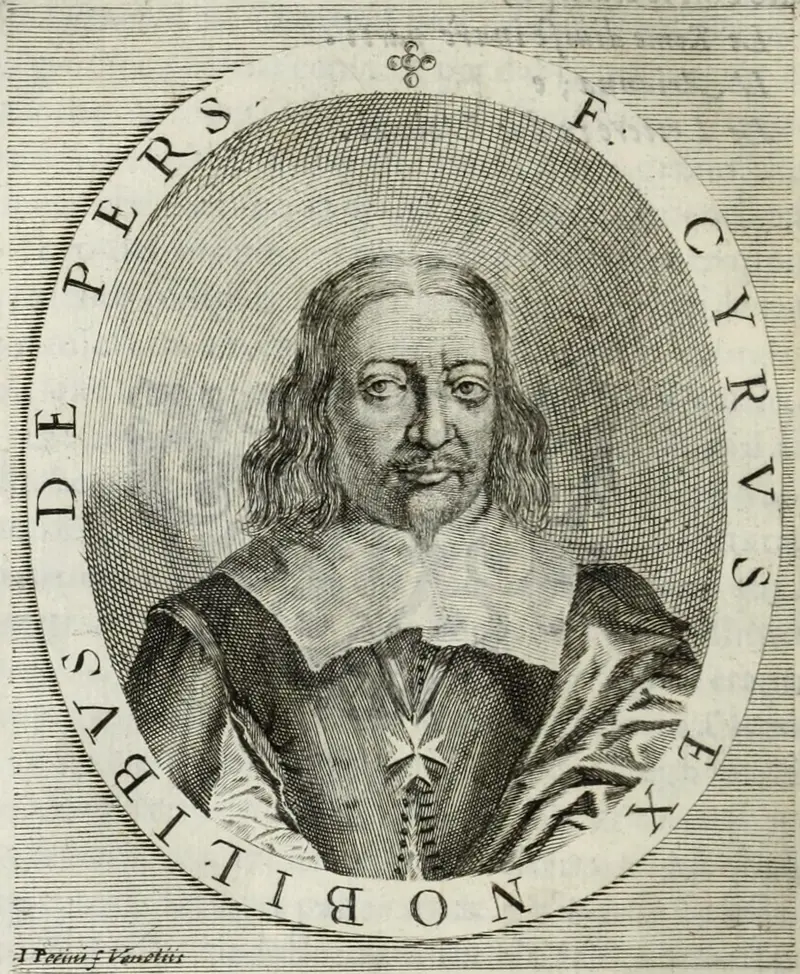
Ciro di Pers studied in Bologna and later travelled to Malta as a knight of the Order of St John. Back in Friuli, he remained in contact with writers and scholars across Italy, including the Venetian Accademia degli Incogniti.
His writing moves between love, faith and the awareness of mortality. Clocks and falling sand give an everyday shape to the question at the heart of ETERNO: what can a human voice hold against the passing of time?
Life & literary context · Treccani ↗THE CANTATA
The orchestra is the landscape.
The voice, somewhere beyond it.
ETERNO unfolds as a sequence of interconnected musical movements. Each movement has its own physical world, its own visual language and its own relationship with the human voice.
The choir becomes memory, humanity, ritual — sometimes almost architecture. And above them appears the soprano. Not simply as a character. Not even entirely as a human presence.
Her voice enters like something coming from another dimension — distant, luminous, almost impossible to locate. At moments she seems to belong to the music. At others, she seems to be observing it from somewhere beyond time.
I · ORIGINE
ACQUA
Before form, there is movement. Before memory, there is water.
ACQUA begins in a world without clear borders — fluid, suspended, almost primordial. The music grows out of motion itself, as if something were slowly taking shape beneath the surface.
Inside the movement
This is not yet a story. It is the beginning of existence.
Origin before identity.
II · MISURA
SABBIA
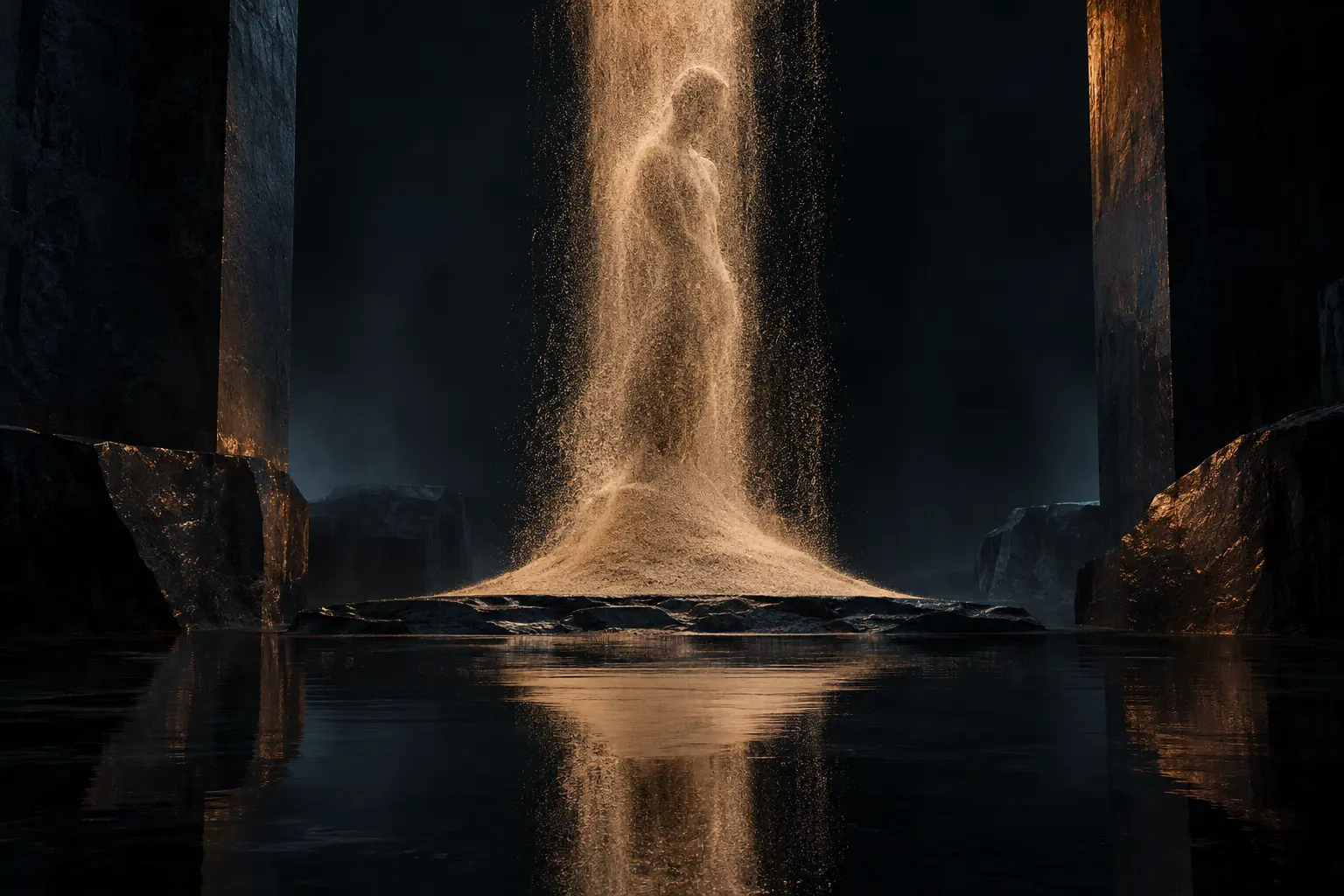
Water becomes matter. Movement becomes measure. Grain after grain, time becomes visible.
SABBIA introduces one of the central images of ETERNO: sand as both substance and clock. Something infinitely small begins to measure something infinitely large.
Inside the movement
A life. A century. A civilization.
“Poca polve inquieta…”
III · QUIETE
SONNO
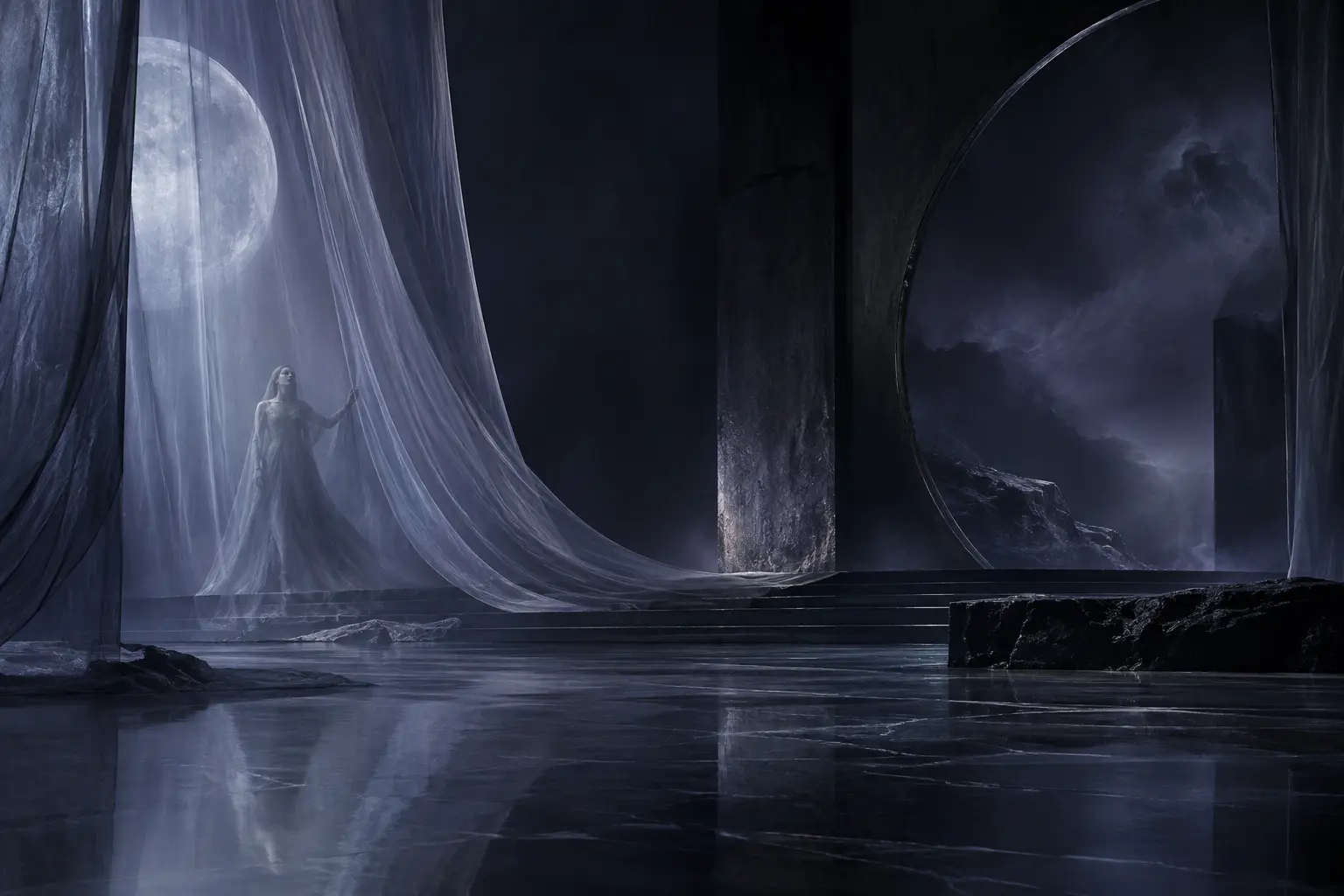
There is a moment when time seems to stop.
SONNO exists between consciousness and disappearance — a space where memory loses its edges and reality begins to dissolve. The orchestra becomes more distant. The human world recedes.
Inside the movement
The soprano can appear here almost without physical presence — a voice without a body, suspended somewhere between dream and awakening.
Is sleep an interruption of time — or another form of it?
IV · GRAVITÀ
TERRA
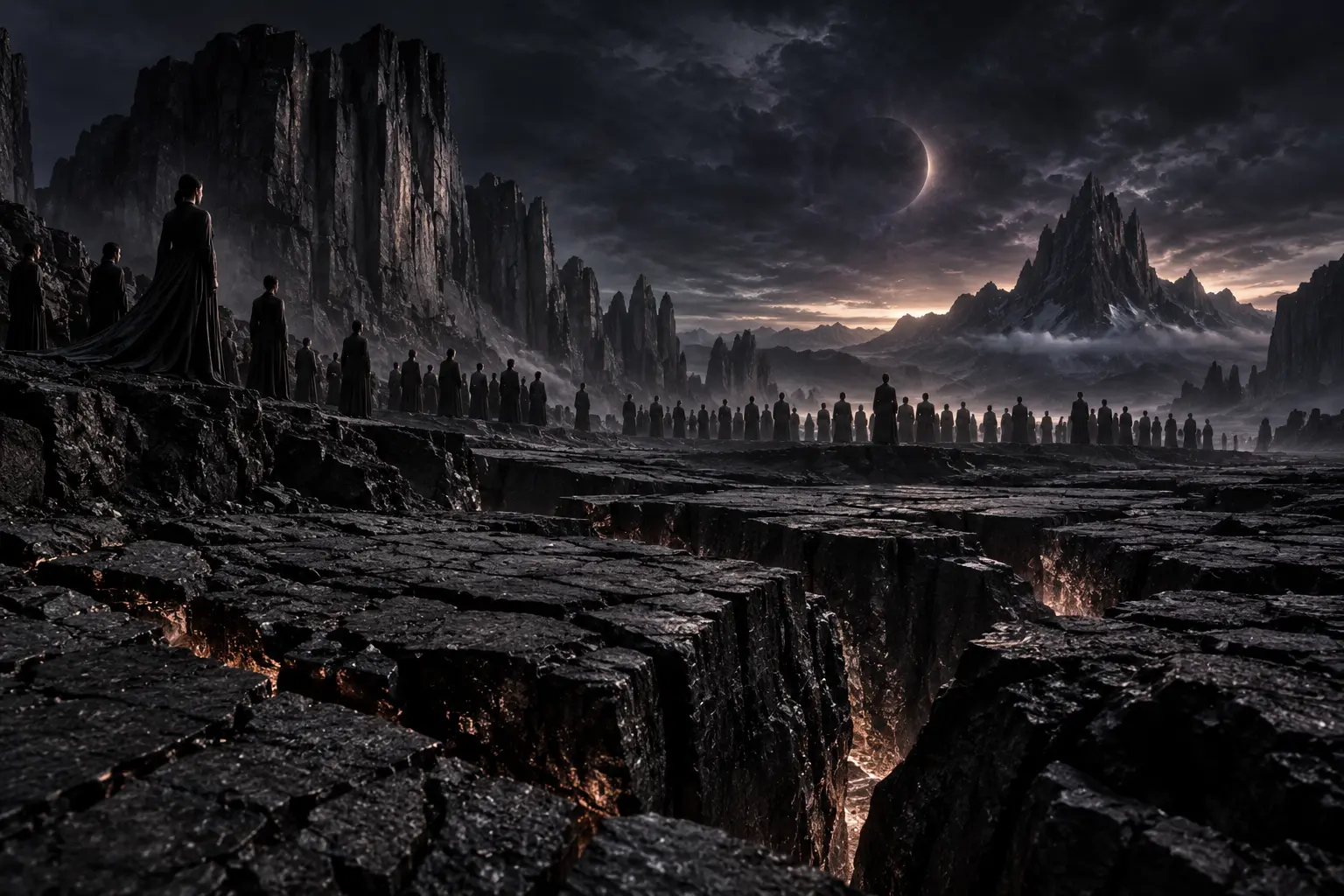
After suspension comes weight. Earth. Gravity. The physical world returns.
TERRA is about our attachment to matter — to the body, to memory, to everything we try to hold. The orchestral language becomes denser and more physical.
Inside the movement
The choir can feel almost ritualistic here: humanity speaking as one body. Everything that lives is drawn toward the earth. And everything that rises must negotiate with gravity.
V · ACCELERAZIONE
VENTO
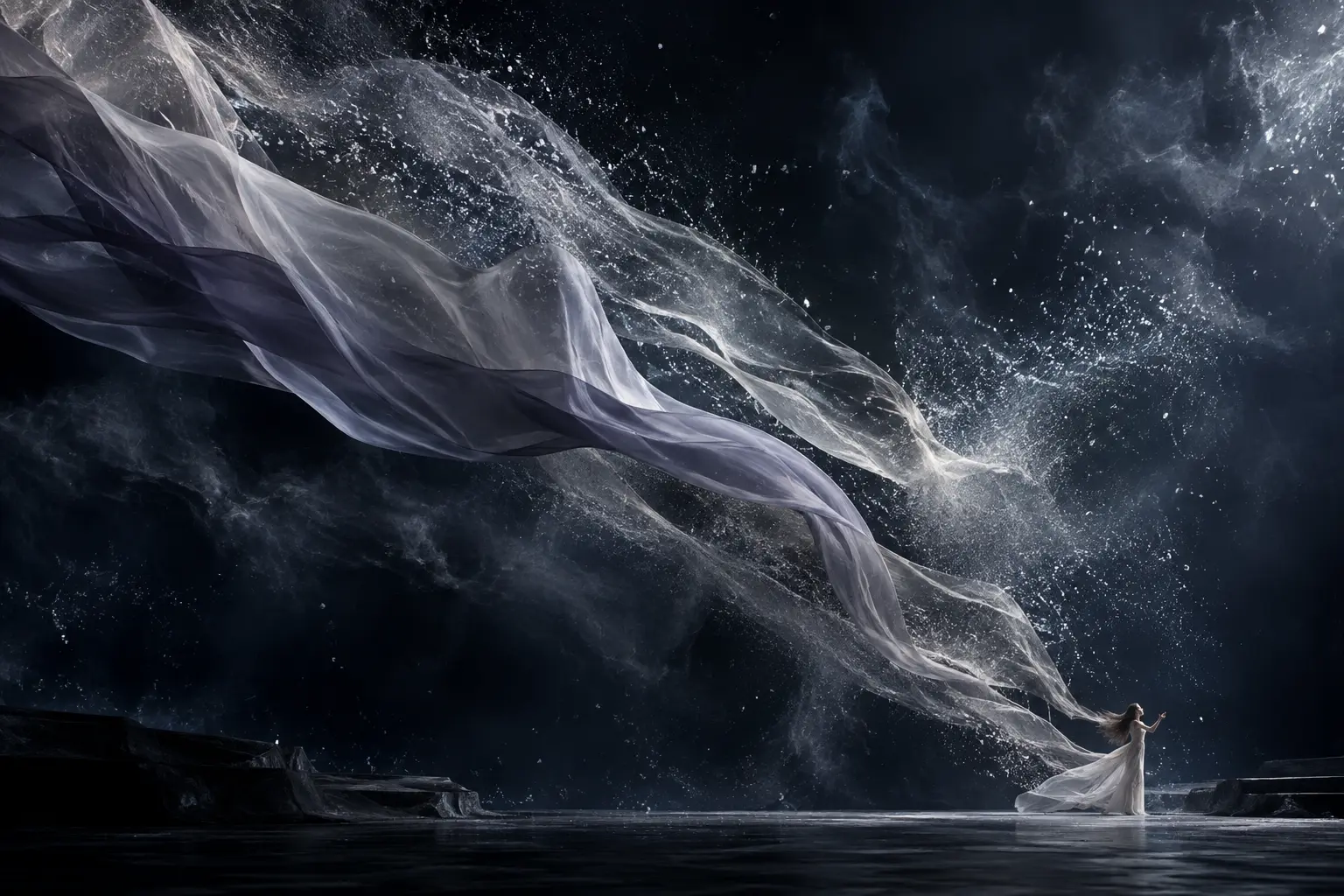
Then the stillness breaks.
VENTO brings motion back into the work — but no longer the slow motion of water. This is acceleration. Air becomes force. Time appears to move faster. The musical material fragments, collides, travels.
Inside the movement
The soprano is no longer only observing the world. Her voice begins to rise through it.
Something is approaching.
VI · TIME MADE VISIBLE
OROLOGIO DA POLVERE
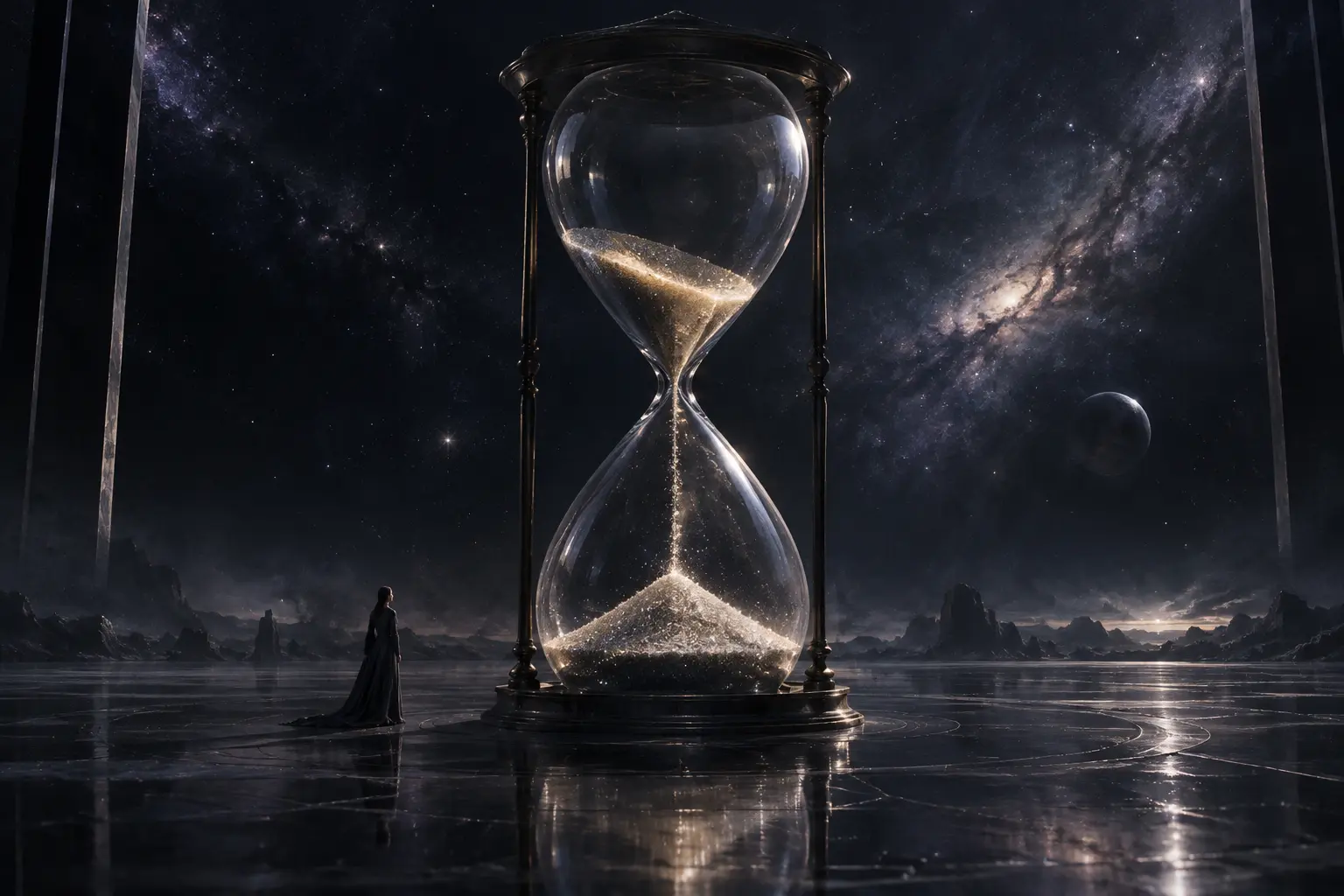
The work returns to the image that began the journey. The hourglass. A small object containing an immense idea.
Sand falls. Nothing dramatic seems to happen. And yet, with every grain, something has changed forever. Ciro di Pers turns this simple mechanism into a meditation on mortality.
Inside the movement
The clock is no longer simply measuring time. It is reminding us that time is irreversible. Here, centuries collapse into one another. The seventeenth-century poem and the contemporary score occupy the same space. The past is no longer behind us. It is inside the present.
“Orologio molesto…”
VII · BEYOND TIME
AURA
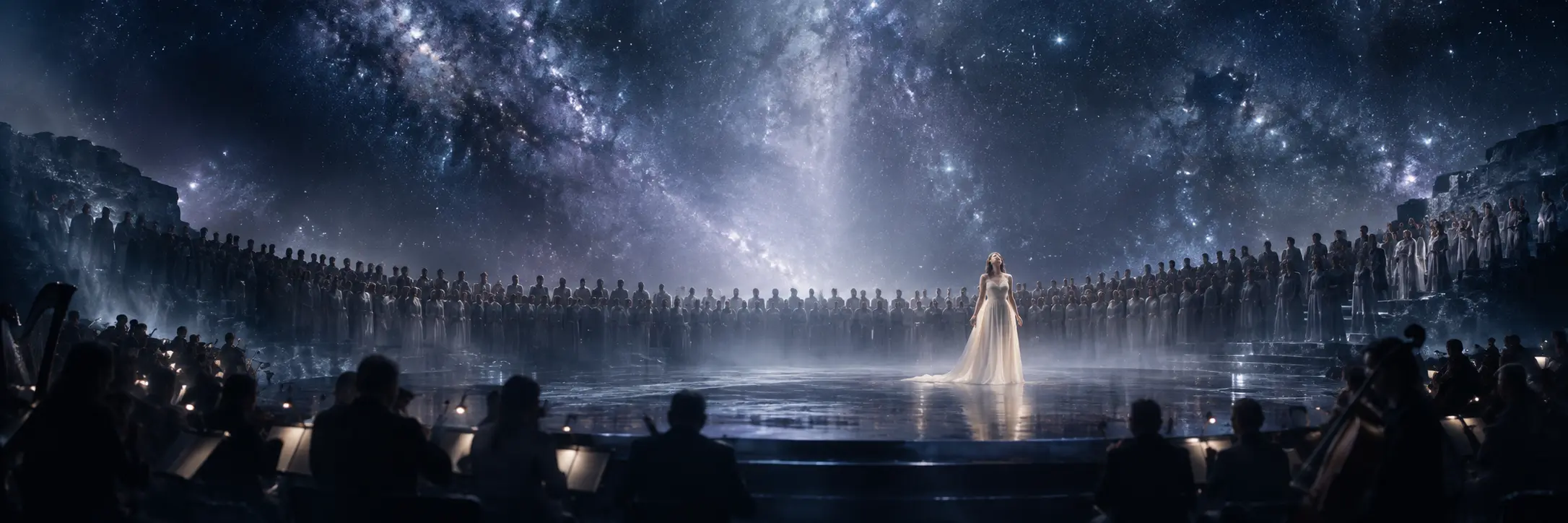
AURA is the final movement of ETERNO. But it is not an ending in the conventional sense.
After water, sand, sleep, earth, wind and the relentless movement of the hourglass, matter begins to lose its importance. The music opens. The boundaries between orchestra, choir and soprano begin to dissolve.
Inside the movement
The soprano rises above the physical world — no longer a distant visitor, but a presence that seems finally to belong somewhere beyond it. Not death. Not disappearance. Release. AURA is the moment when ETERNO stops asking how time passes — and begins to imagine what might exist outside it.
What if eternity is not endless time? What if it is the absence of time?
ETERNO / OPEN AIR CONCEPT
Centuries apart.
Under one sky.
Ancient stone holds the memory of centuries. A living voice answers it.
This open-air staging concept brings Ciro di Pers’s poetry into a contemporary world of orchestra, choir, synthesizers and soprano. The choir inhabits the arches; light traces time across the walls. Sand, water and movement make its passage visible.
In the central encounter, the imagined presence of the poet meets the soprano’s voice — a dialogue across time.
Staging concept · Not a realised production
THE VOICE A presence from somewhere else
The soprano in ETERNO does not function as a conventional protagonist. She appears only at particular moments. Her rarity is essential. When the human voice enters, the musical space changes.
It should feel almost as though a signal has reached us from another plane — intimate and distant at the same time. At first, we may not know who she is. By the end of the cantata, perhaps the question is no longer necessary.
She may be memory.
She may be time.
She may be the soul of the work itself.
A WORK ACROSS TIME A note from Demitri DARR
ETERNO has lived with me for more than twenty-five years. It began with a poem and a melody. For a long time, I did not know what the final form of the work would become.
Perhaps that was necessary. Because ETERNO itself is about time. About transformation. About things that disappear and return changed.
What began with the words of a poet from another century has gradually become a world of orchestra, choir, voice, image and space. And it is still evolving.
THE POETRY · WORDS TRAVELLING THROUGH TIME
“Io non ho da lasciar porpora…”
ETERNO
Music by Demitri DARR
Inspired by the poetry of Ciro di Pers
A contemporary cantata for orchestra, choir and soprano.